Suzhou Embroidery: When Heritage Craft Meets Contemporary Art
New to Luneville embroidery?
Start with the chain stitch—my free visual guide shows you exactly how
Across many traditional crafts today, practitioners face a familiar question: how can heritage techniques remain relevant without turning into museum artefacts, and without being reduced to purely commercial decoration?
This question — how to preserve a craft while allowing it to evolve — appears in many craft communities. I encountered it again recently while visiting the exhibition “Suzhou Embroidery: The Awakening of a 1000-Year Tradition” at the Royal Geographical Society in London.
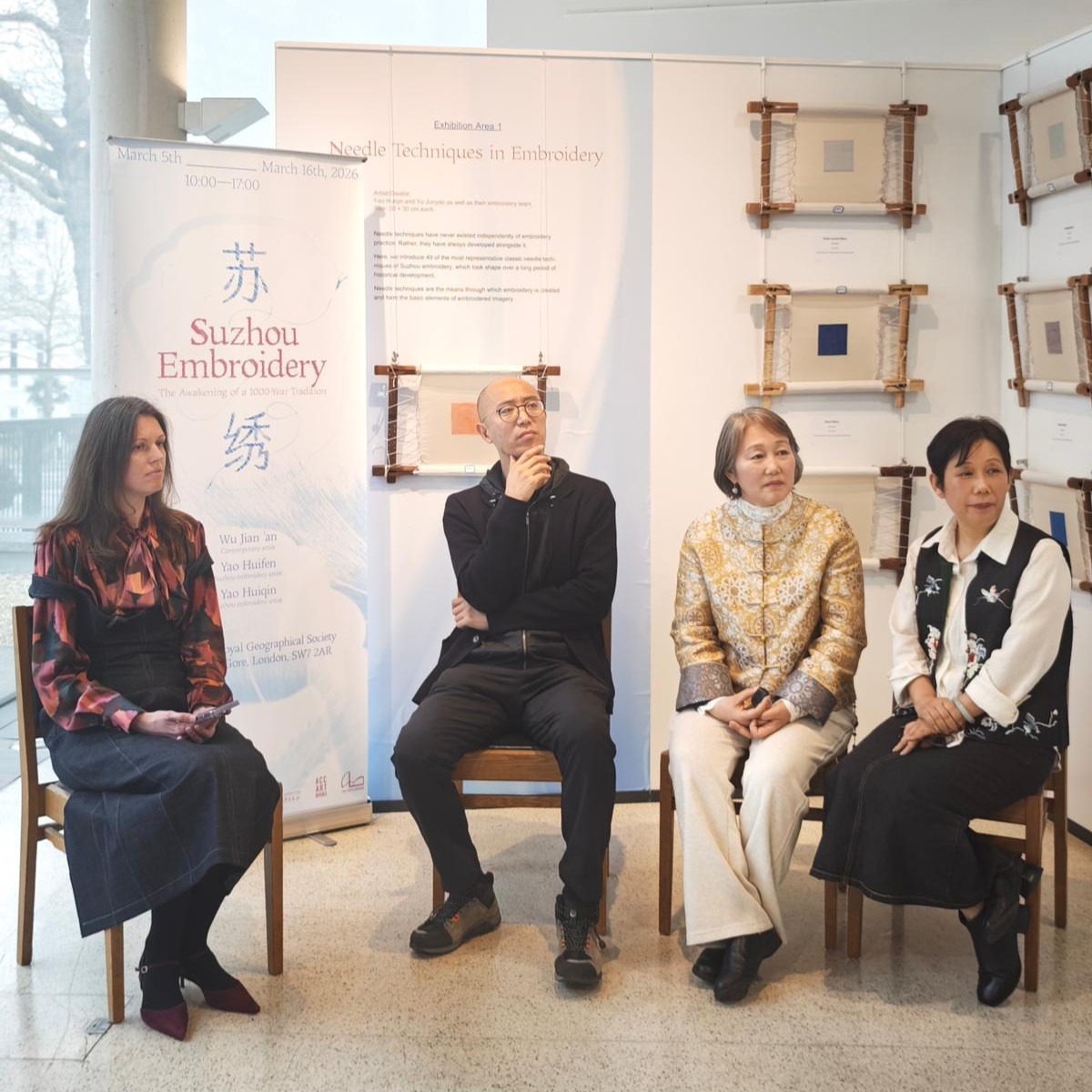
I attended the exhibition as part of a group of embroiderers invited by ROSA Magazine, and the visit included a discussion with contemporary artist Wu Jian’an and Suzhou embroidery masters Yao Huifen and Yao Huiqin.
What became clear during the discussion is that this challenge is not unique to any one country or tradition. Craftspeople working with heritage techniques in very different parts of the world are asking similar questions.
What Is Suzhou Embroidery?
Suzhou embroidery originates from the city of Suzhou in Jiangsu province, China. With a history of more than a thousand years, it is one of the most important classical embroidery traditions in the country.
The technique is known for extremely delicate stitching and refined visual effects. Historically, Suzhou embroidery developed in close connection with Chinese painting. Embroidered works often reproduce images based on painted compositions, translating brushwork and tonal variation into thread.
Because of this relationship, embroidery traditionally functioned as a means of interpreting an image created elsewhere. The embroiderer’s role was to reproduce the visual structure of a painting as precisely as possible through stitching.
Over time, this approach created a highly developed technical system. At the same time, it also shaped the role of embroidery within the visual arts. The stitch remained primarily a technical tool used to reproduce an image rather than an independent element of artistic expression.
Rethinking the Role of the Stitch
The exhibition in London addresses this issue directly. Its central argument is that embroidery should not be viewed simply as a technical skill or as an “appendage of images.” Instead, the stitch itself can become an independent aesthetic subject.
The exhibition explores this idea through a collaboration between contemporary artist Wu Jian’an and Suzhou embroidery masters Yao Huifen and Yao Huiqin. Their joint project investigates how traditional embroidery techniques might function as a language capable of expressing contemporary artistic ideas.
In the exhibition materials, this transformation is described as a movement from technique, to art, and finally to method — suggesting a shift from technical reproduction toward a more autonomous form of creative expression.
Three Chapters of the Exhibition
The exhibition presents this idea through three sections.
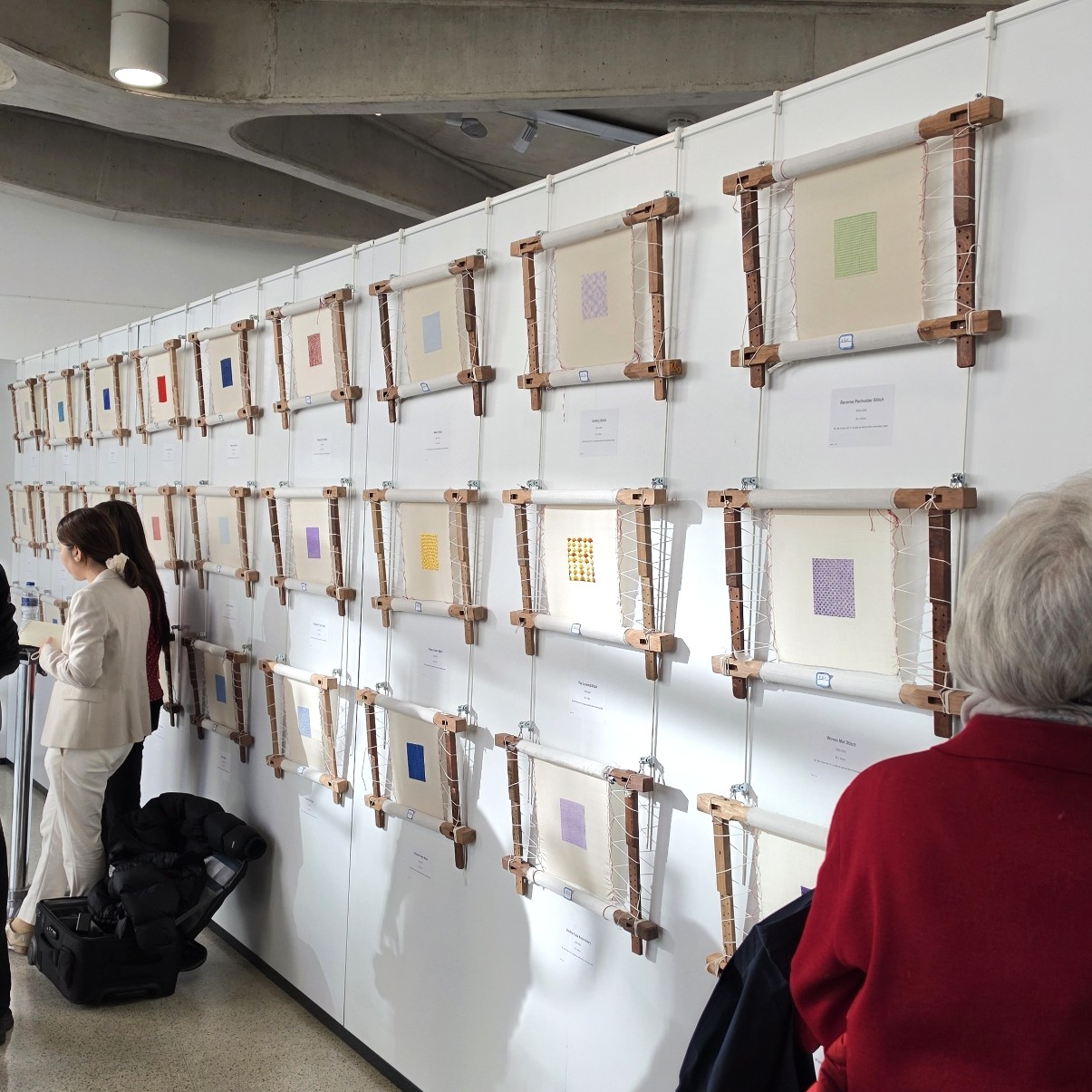
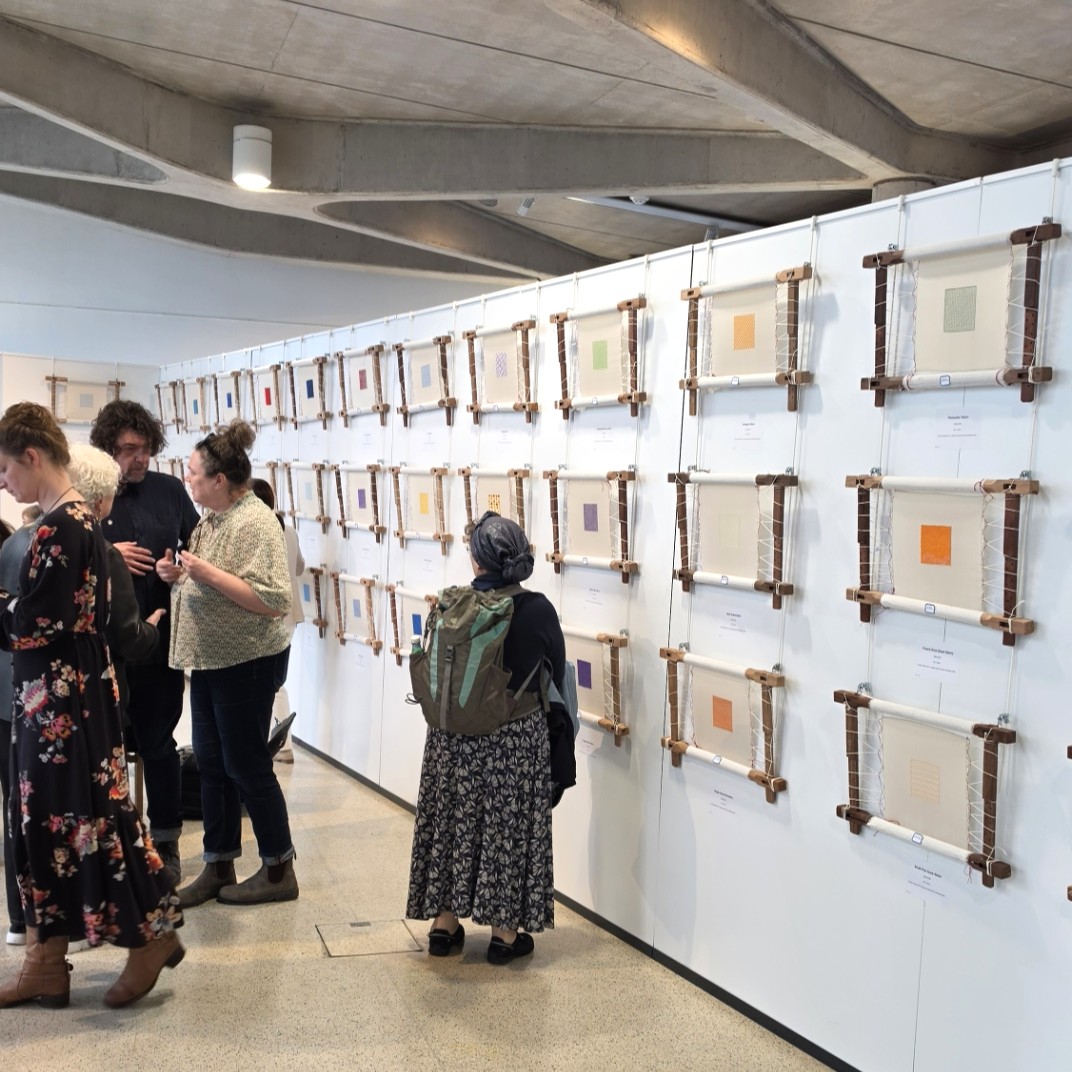
The first section, “Needle Techniques in Embroidery,” introduces several representative traditional Suzhou stitch techniques. These samples demonstrate how the technical vocabulary of the craft developed historically and how different stitch structures contribute to the visual qualities of embroidered imagery.
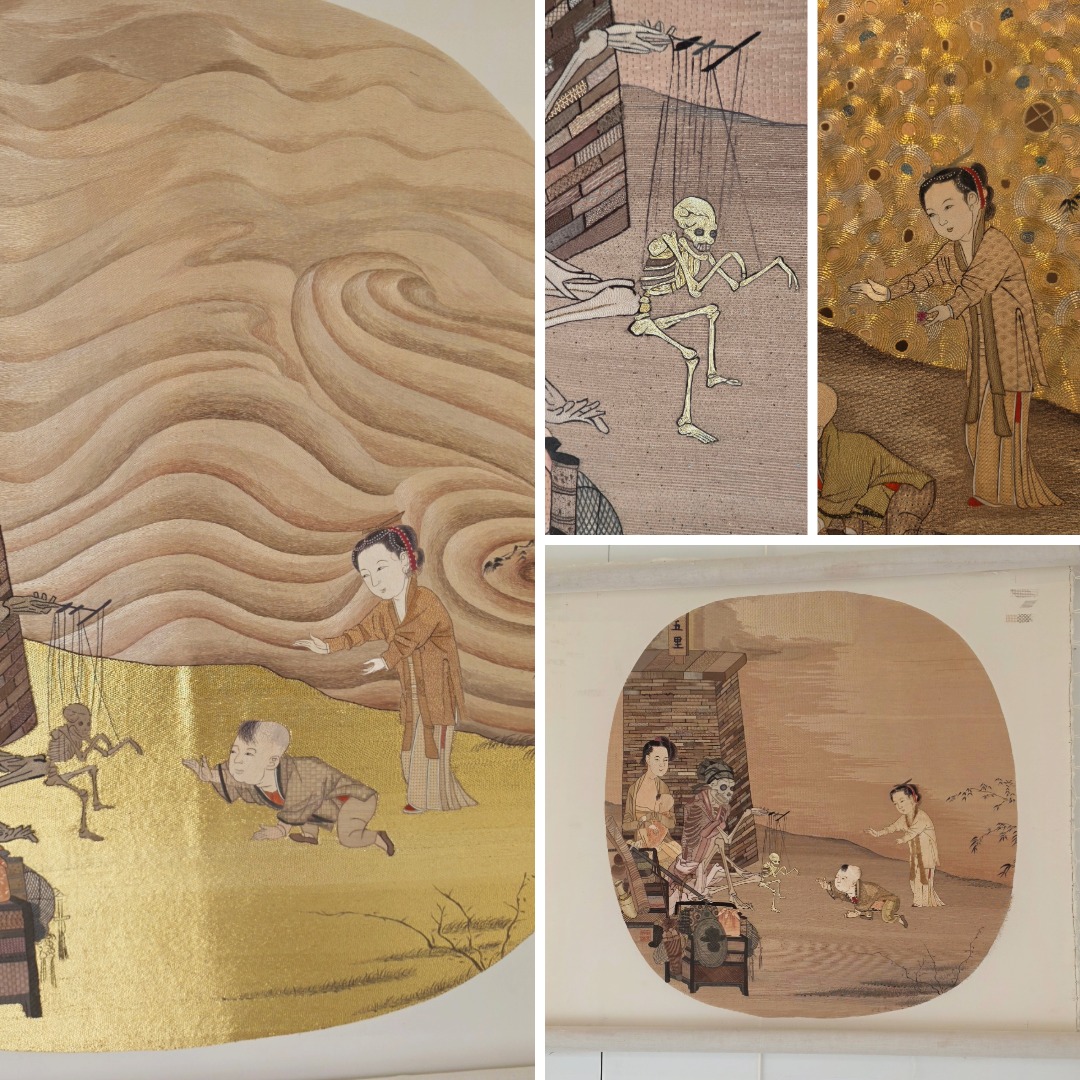
The second section focuses on a series of contemporary embroidered works based on the painting “Skeleton Puppet Play,” originally created by the Southern Song dynasty artist Li Song. The painting depicts skeletal figures performing puppet theatre, using humour to reflect on themes of life and death.
For the exhibition, contemporary artist Wu Jian’an designed a reinterpretation of this historical image. The works were then embroidered by Yao Huifen, Yao Huiqin, and their team of embroiderers. In these pieces, multiple stitch types are placed side by side, creating deliberately contrasting structures within the same composition. This approach departs from the conventional logic of embroidered painting, where stitching normally follows the visual structure of the original image.
The series gained international attention when it was presented at the China Pavilion of the 57th Venice Biennale, marking a rare moment when Suzhou embroidery entered one of the world’s major contemporary art exhibitions.
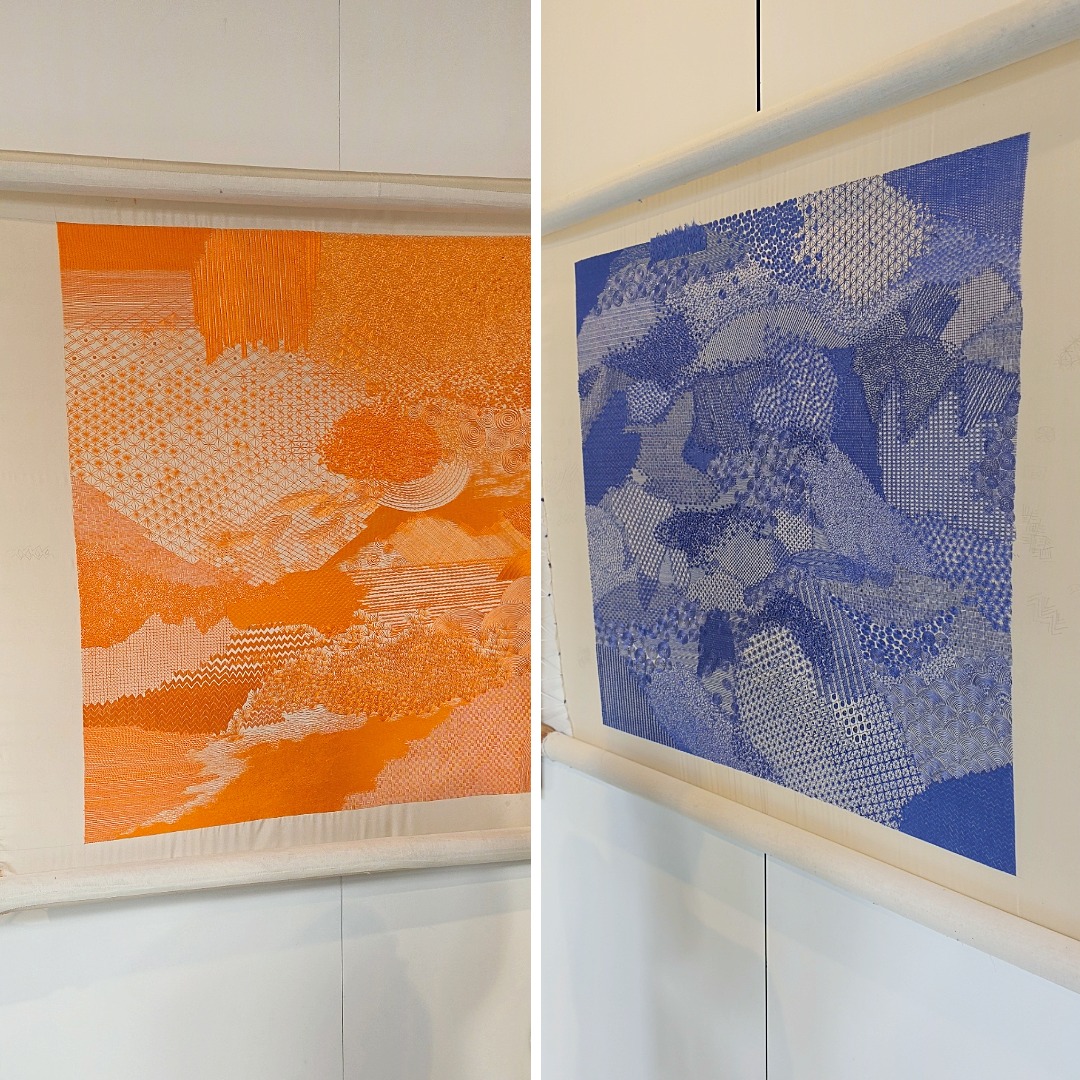
The third section of the exhibition presents two works titled “The Consciousness of the Needle.” In these pieces, the number in each title refers to the number of stitching techniques used within the work. Instead of following a predetermined image, the stitches interact directly with the fabric and with one another. Overlapping threads, intersections, and variations in density become the primary visual elements.
In this context, stitching no longer serves to represent an external subject. The structure of the stitch itself becomes the focus of the work.
Collaboration Between Artist and Embroiderers
An important aspect of the project is the collaboration between a contemporary artist and master embroiderers.
Wu Jian’an is a professor at the Central Academy of Fine Arts in Beijing and is known for complex compositions built from drawing and collage. His work often explores how traditional visual culture can interact with contemporary artistic practice.
Yao Huifen and Yao Huiqin represent a lineage of Suzhou embroidery masters. Both come from families with several generations of embroidery practice and are recognised inheritors of the National Intangible Cultural Heritage of Suzhou embroidery. Their work has been collected by major museums and cultural institutions.
In the collaborative works presented in the exhibition, the artist’s visual ideas and the embroiderers’ technical knowledge intersect. This dialogue between artistic concept and craft technique lies at the centre of the project.
A Question Shared by Many Craft Traditions
For those working within craft traditions, the exhibition raises a broader question: how can heritage techniques continue to develop without losing their identity?
The project presented in London does not offer a definitive answer. Instead, it demonstrates one possible approach — placing a traditional craft in dialogue with contemporary artistic practice.
During the discussion with the artist and embroiderers, what became clear is that this question is not unique to Suzhou embroidery. Craftspeople working in many different traditions are trying to find ways to respect inherited knowledge while still allowing their practice to evolve.
The exhibition “Suzhou Embroidery: The Awakening of a 1000-Year Tradition” therefore reflects a wider conversation about the future of heritage crafts. It suggests that tradition and innovation do not necessarily stand in opposition. Rather, the relationship between them continues to be negotiated by practitioners working within the craft today.
Written By
Ksenia Semirova
MA Textiles
An experienced hand embroidery and textile artist based in Hove, UK. Professionally practicing since 2021, mastering various techniques.
Also a fine artist and visual researcher, exhibiting her works across the UK and internationally.
Join my mailing list
Get the latest and greatest updates to your inbox!