Spring/Summer 2026: How Familiar Motifs Are Reworked Through Embellishment
New to Luneville embroidery?
Start with the chain stitch—my free visual guide shows you exactly how
If you’re looking for ideas for a new embellishment project, Spring/Summer 2026 is a good season to look at — not because designers invented new themes, but because they keep returning to very familiar ones. Fruit, animals, birds, flowers, stars. All obvious topics. All things we’ve seen before.
What’s interesting this time is how these ideas appear on garments. Motifs are handled differently through placement, scale, and surface treatment. The same subject can look completely different depending on how it is applied.
This article looks at several Spring/Summer 2026 trend themes and shows how they appear as embellishment on runway garments. If you’re stuck repeating the same motifs or defaulting to plain surfaces, these trends offer concrete reference points for how familiar ideas can be handled differently.
All the runway references used here are collected in a Pinterest board, structured by trend for easier viewing.
Work a Sight Gag
In Spring/Summer 2026, “Work a Sight Gag” is about using embellishment to show something instead of actually doing it. Belts, layers, underwear, seams, even anatomy appear as images, drawings, or embroidery rather than as functioning parts of the garment.
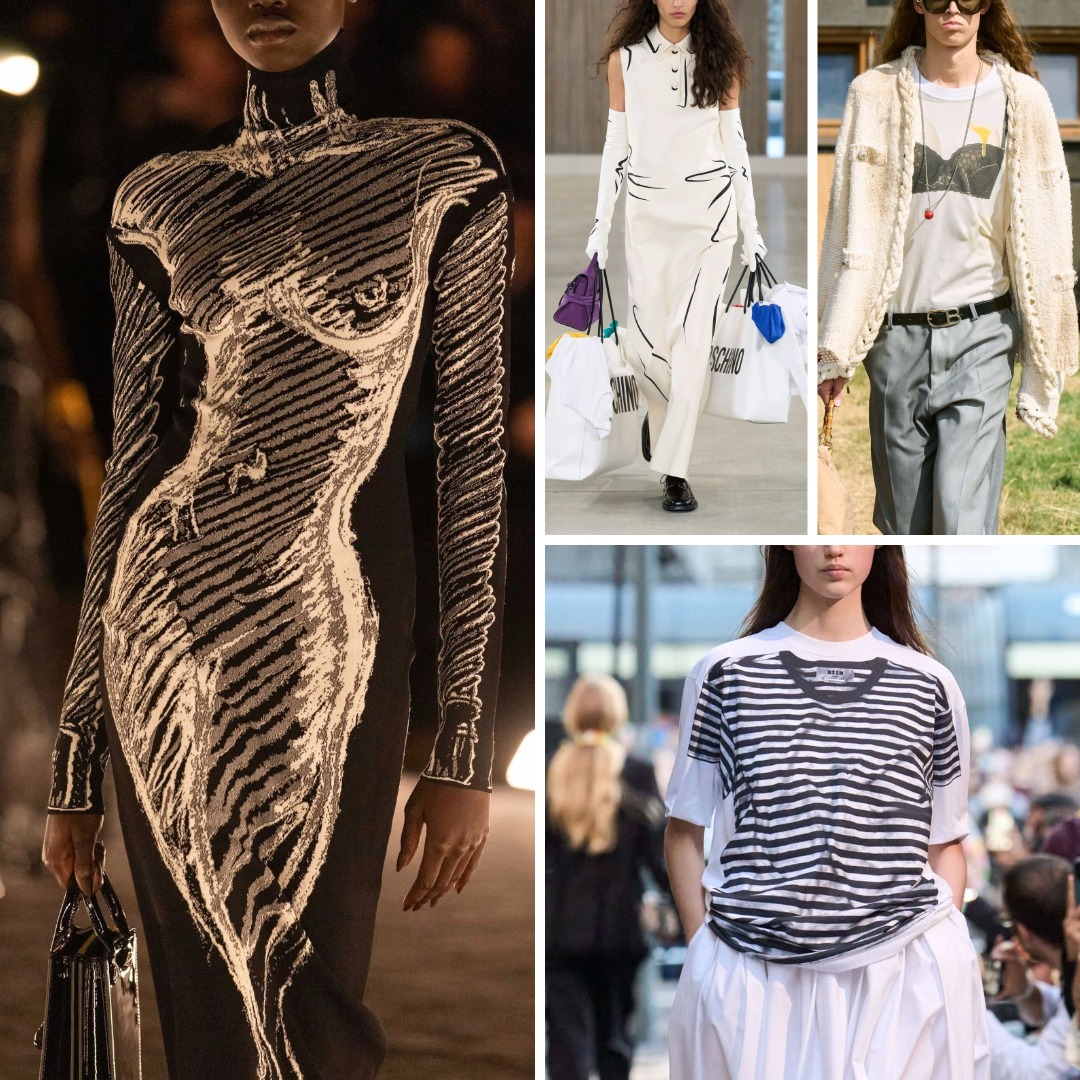
The illusion sits entirely on the surface. What looks layered is flat, what looks constructed is only outlined. This approach turns familiar clothing logic into a visual joke without changing the garment’s structure. Examples include Orimi Tokyo, MSGM, Doublet, Moschino, and Schiaparelli.
Feel Fruity
In Spring/Summer 2026, fruit appears as a literal, recognisable object, not as a decorative pattern. Designers avoid abstraction or repetition, choosing instead to show fruit once, clearly, and at a readable scale. The subject is obvious; the interest lies in placement and context.
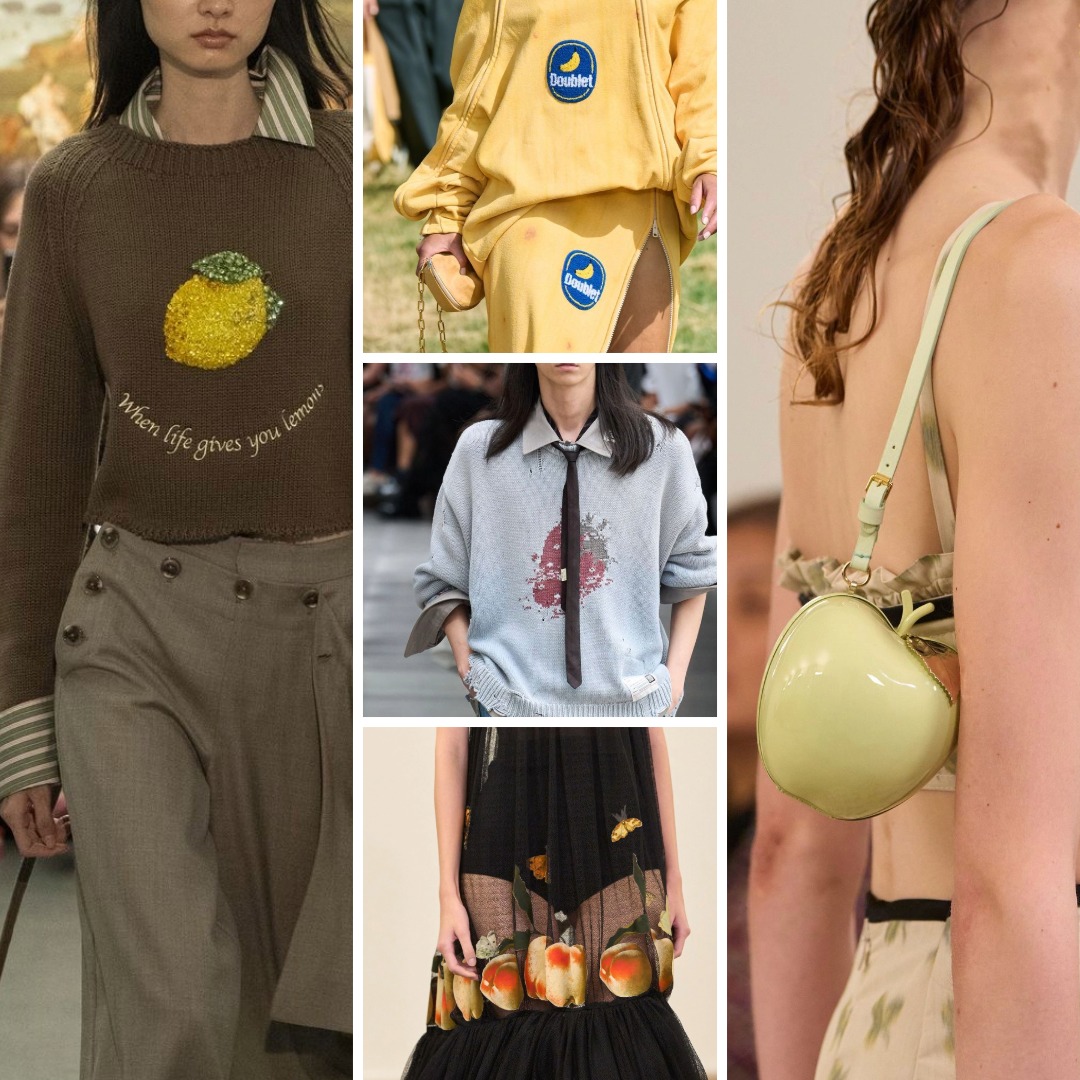
Fruit may appear as a single image on a garment or become the object itself, as seen in accessories. This approach is visible at Giambattista Valli, Doublet, Maison Mihara Yasuhiro, and Monse.
Pet Sit
“Pet Sit” in Spring/Summer 2026 centres on casual yet expressive animal imagery that evokes comfort and companionship, exactly as described by Vogue. Animals appear as familiar presences, integrated into everyday clothing rather than used as symbols or decorative statements. Across the season, pets are shown in a way that feels approachable and lived-in.
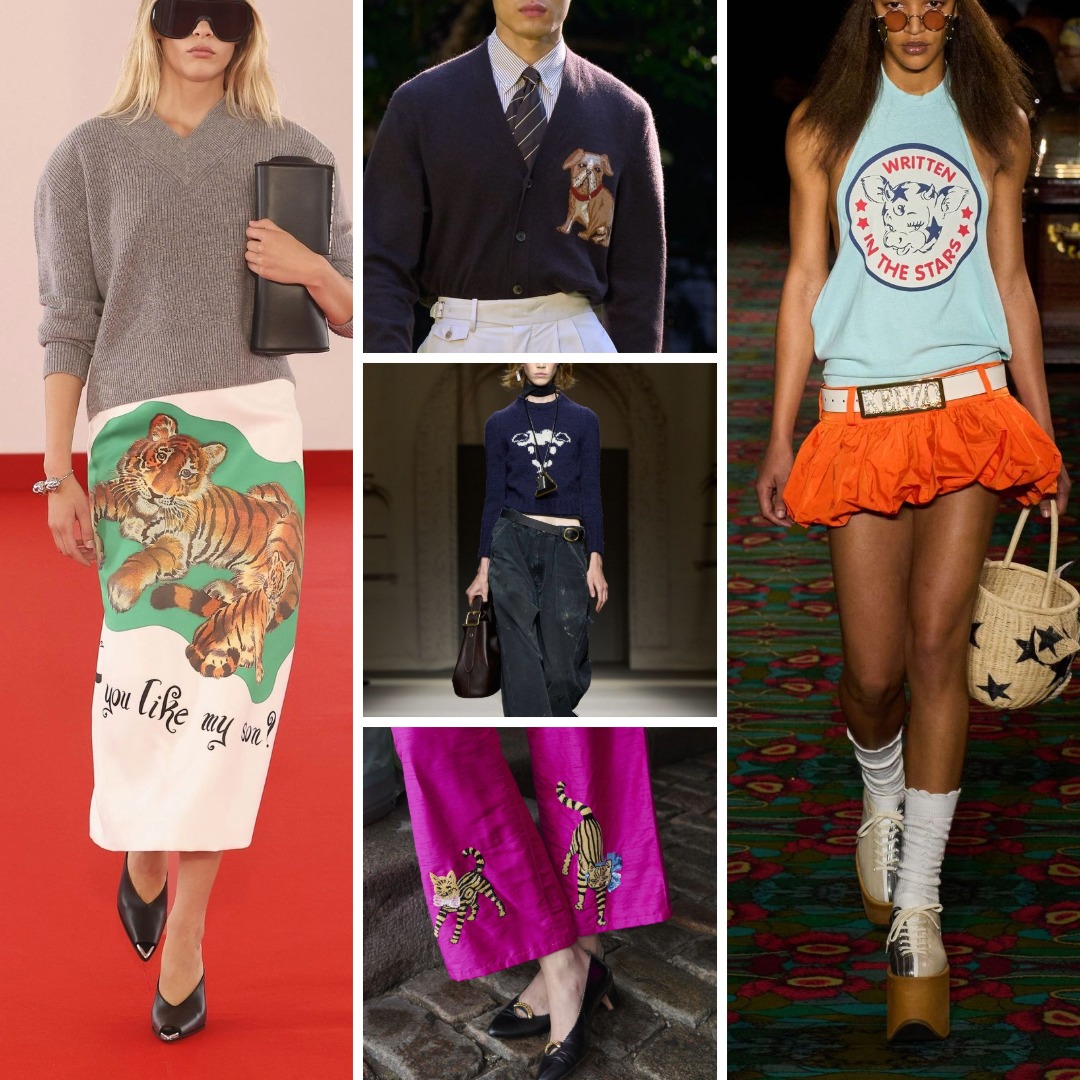
This can be seen at Coach, Kenzo, Doublet, Brandon Maxwell and Dunhill.
Bird Watch
In Spring/Summer 2026, birds appear either as clear figurative imagery or through materials associated with plumage, such as feathers. The reference is visual and direct, without symbolism or storytelling. Birds are placed in specific areas, leaving the rest of the garment relatively quiet.
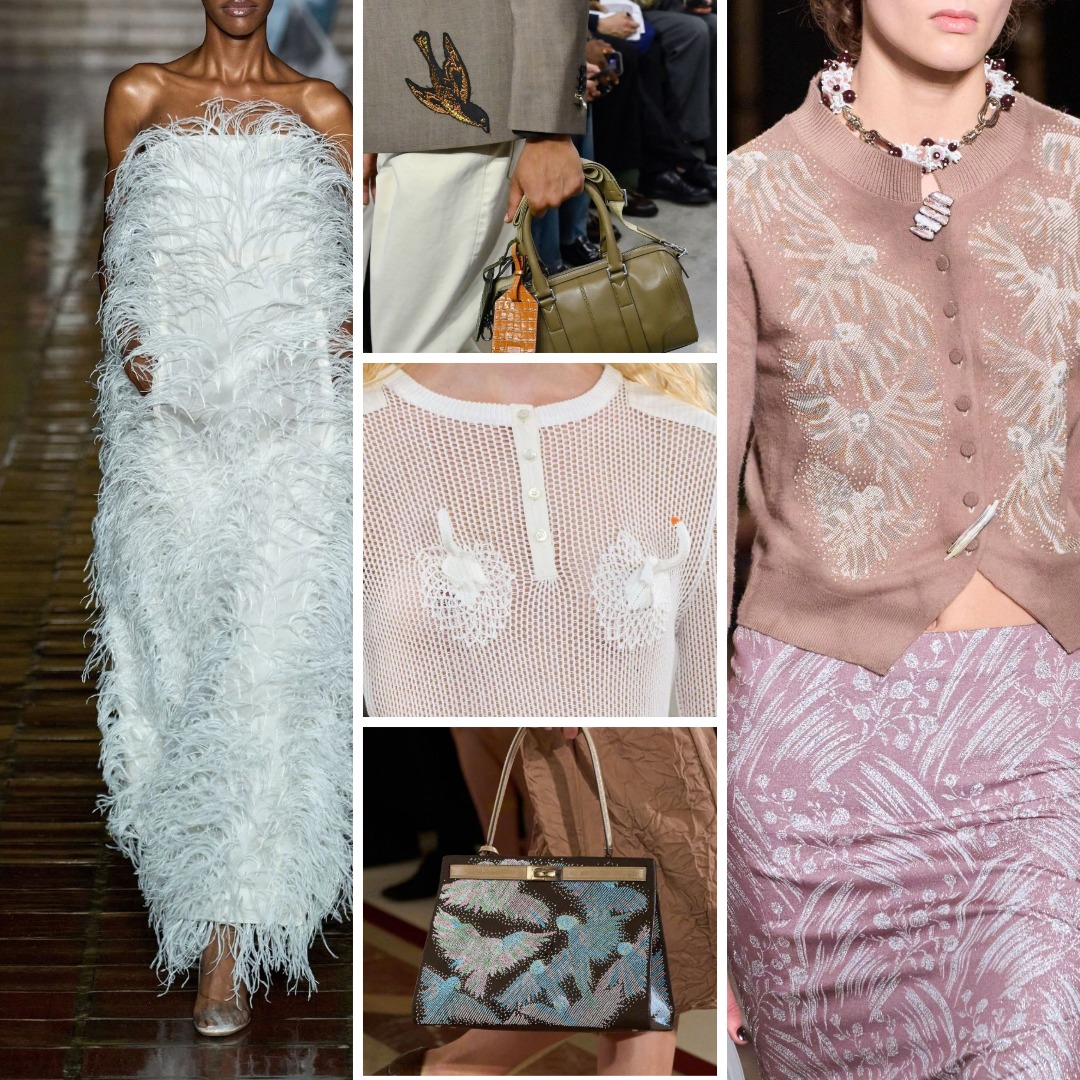
This can take the form of embroidery, print, or material construction. Examples include Moschino, Prabal Gurung, Tory Burch, and Paul Smith.
Stargaze
In Spring/Summer 2026, “Stargaze” refers to collections that repeatedly use celestial imagery across multiple garments rather than as isolated embellishment. Stars, moons, and night-sky references appear as printed or illustrated surface elements, forming a consistent visual language within a collection.
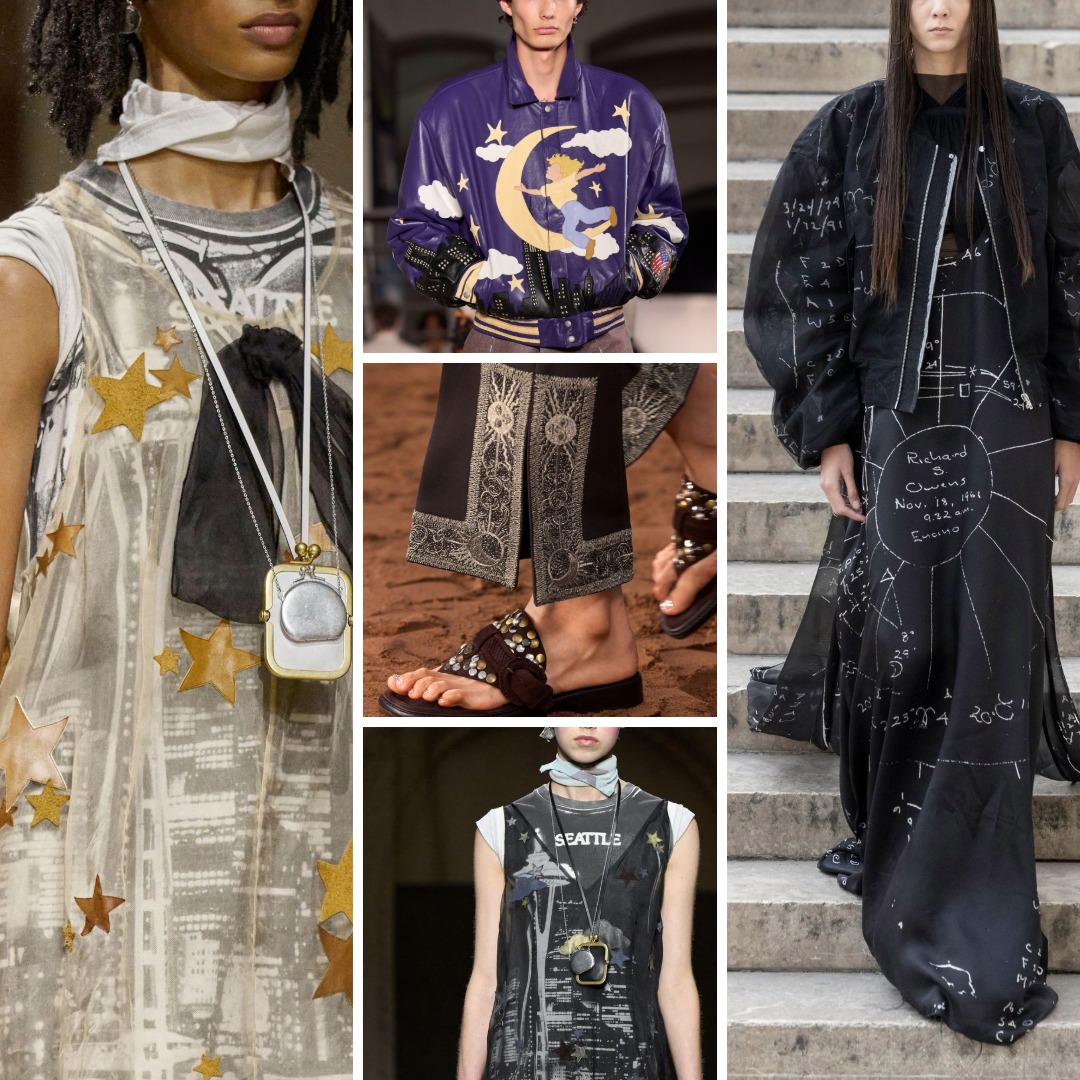
At KidSuper, celestial imagery is derived from an illustrated book project (The Boy Who Jumped the Moon), with stars and related imagery appearing as graphic illustrations across jackets, shirts, and trousers. At Coach and Burberry, star motifs are applied lightly and intermittently. At Rick Owens, celestial references are absorbed into surface treatment and repetition rather than shown as distinct symbols.
Say It With Flowers
In Spring/Summer 2026, floral motifs appear as placed embellishment rather than all-over pattern. Flowers are applied as embroidery, appliqué, or constructed elements concentrated in specific areas of the garment.
Floral elements often mark edges, openings, or focal zones such as the chest, cuffs, hems, or accessories, leaving the rest of the surface untreated.
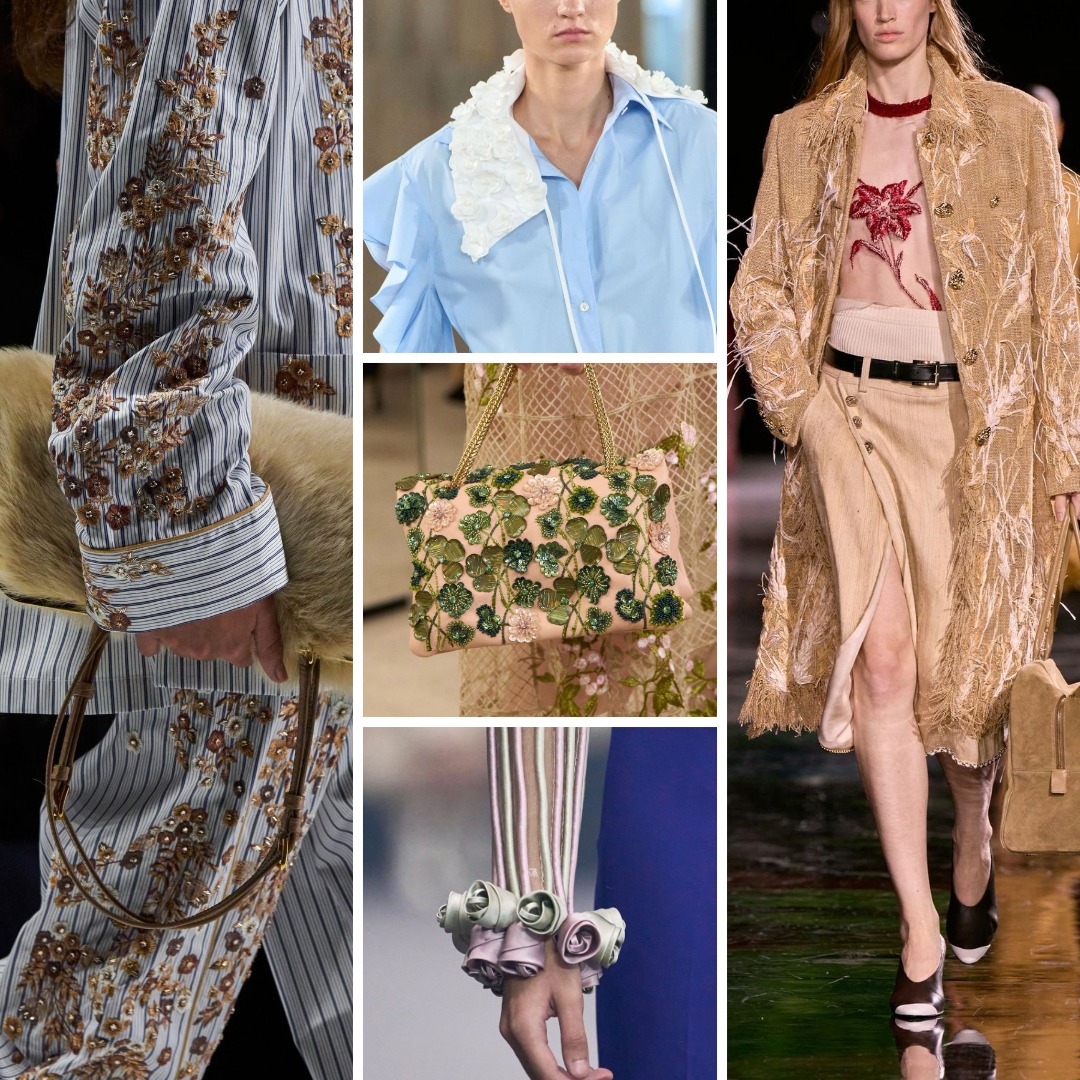
Seen at Chanel, Giambattista Valli, Valentino, Moschino, and Dolce & Gabbana.
Spring/Summer 2026 shows how designers use familiar ideas to talk about the present. When collections are shown, they don’t just introduce new styles — they reflect how people are living now, or how designers imagine everyday life might feel. Fruit, animals, flowers, stars, birds are not new subjects, but they remain useful because they are immediately recognisable.
What stands out this season is how these familiar things are reinterpreted rather than replaced. Designers return to the same ideas, but change how they are applied: reducing them to a single image, shifting their placement, flattening them, or isolating them on the surface of the garment. Creativity comes from interpretation, not invention.
Taken together, these Spring/Summer 2026 trends suggest a move toward working with what is already known — and finding new ways to make it relevant.
See also:
You can also read my article on Spring/Summer 2025 embroidery trends for a look at how embellishment was approached in the previous season.
And if you want to see where things are going next, I’ve also looked at the key embellishment trends for Fall/Winter 2026.
Written By
Ksenia Semirova
MA Textiles
An experienced hand embroidery and textile artist based in Hove, UK. Professionally practicing since 2021, mastering various techniques.
Also a fine artist and visual researcher, exhibiting her works across the UK and internationally.
Join my mailing list
Get the latest and greatest updates to your inbox!