Unearthing the Identity of a Pinezhsky Pearl Diadem at the V&A Museum
New to Luneville embroidery?
Start with the chain stitch—my free visual guide shows you exactly how
While exploring the vast collection of the Victoria and Albert Museum, I came across an object labeled as an “Eastern European headdress” from the 19th century. As an embroidery and textile artist with a deep interest in Russian heritage, I immediately recognized this headpiece—not as a generic artifact but as a Pinezhsky pearl diadem, a rare bridal headdress from the Russian North.
This discovery inspired me to research its history, design, and cultural significance, shedding light on the artistry behind this remarkable piece.
The Design of the Pinezhsky Pearl Diadem
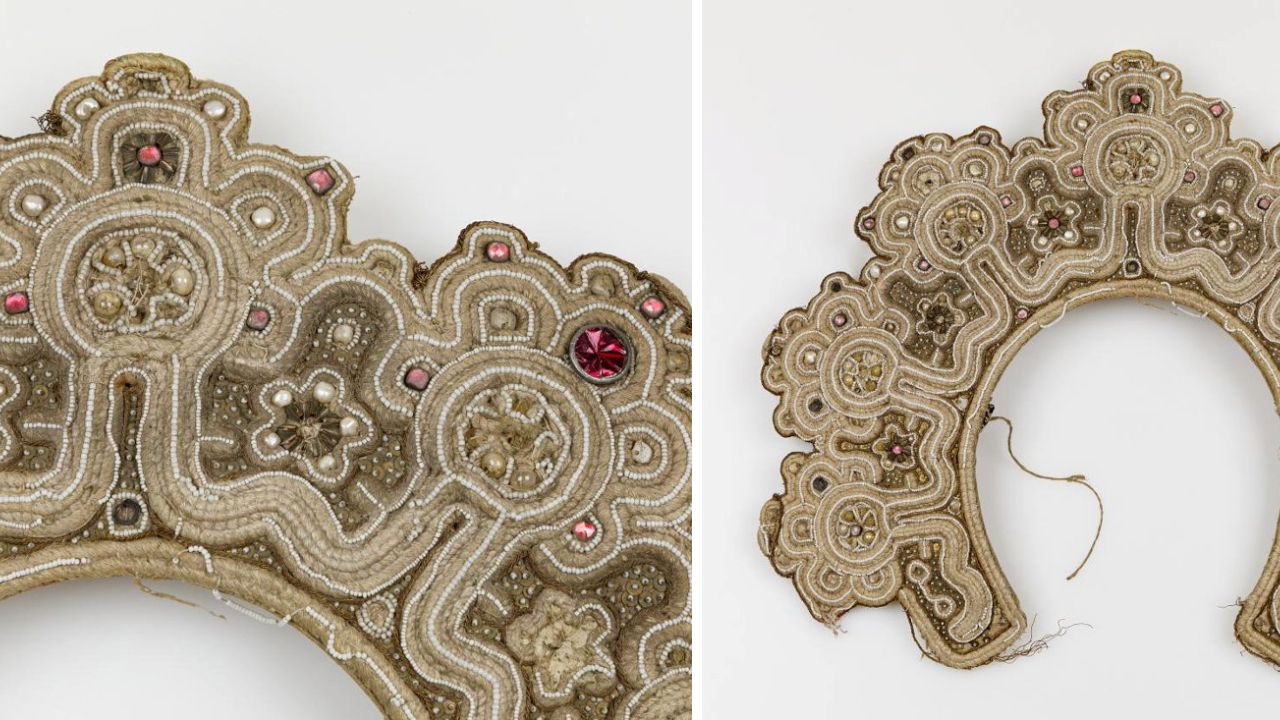
The Pinezhsky pearl diadem is a stunning example of northern Russian craftsmanship. Its origins can be traced to the 16th and 17th centuries, a period when Russian artistry reached its zenith through a blend of folk traditions and princely influences. This synthesis resulted in headpieces that combined the elegance of courtly attire with the symbolic and practical elements of rural life.
The diadem features a stiff circular base with five or seven ornate projections, which resemble architectural forms. This shape ties to its historical name: “венец с городы” (diadem with towers) or “венец теремчат” (towered diadem), reflecting its resemblance to the turrets of princely chambers.
Its surface is richly adorned with pearl setting, a meticulous technique where pearls and beads are stitched onto cords (cotton or linen), which are then attached to a white fabric base. This method creates intricate, raised patterns, often featuring stylized rosettes connected by wave-like lines, symbolizing continuity and harmony. Some diadems also incorporated colored glass and metallic sequins to enhance their brilliance.
Ethnographer M.A. Saburova has suggested that the design of these diadems emerged from a synthesis of folk and princely headwear traditions dating back to pre-Mongolian Rus’. This blend of influences reflects the cultural exchange between the rural and noble classes of the time. For instance, northern Russian wedding songs refer to the bride and groom as “princess” and “prince,” while guests are called “boyars”, evoking the grandeur of courtly ceremonies. The diadem, therefore, was not just a decorative accessory but a powerful symbol of status, tradition, and unity.
Cultural Significance in Pinezhsky Wedding Rituals
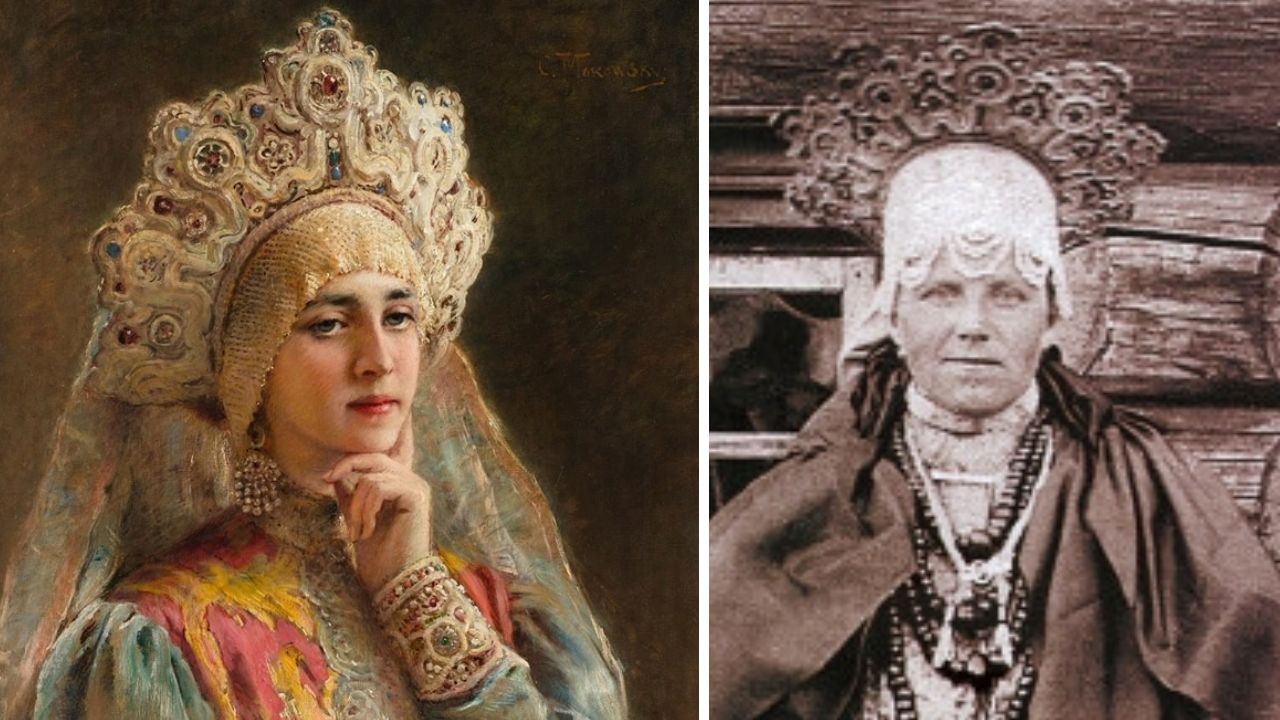
Research, such as that by Lyudmila Kislukha, highlights the role of these diadems in northern Russian weddings. The diadem was worn during the “viewing of the bride”, a pre-wedding ritual where the groom’s family visited the bride’s home. This stage was pivotal, as it marked the official engagement and familial approval.
The bride’s appearance in the diadem was meant to impress not only her future husband but also his family, showcasing her beauty and worthiness. It was placed atop a simpler headwrap, emphasizing the bride’s elevated status and signaling her transition from maidenhood to marriage. In some cases, these diadems were shared among families, as owning such an ornate piece was a luxury.
The Misattribution of the V&A Headdress
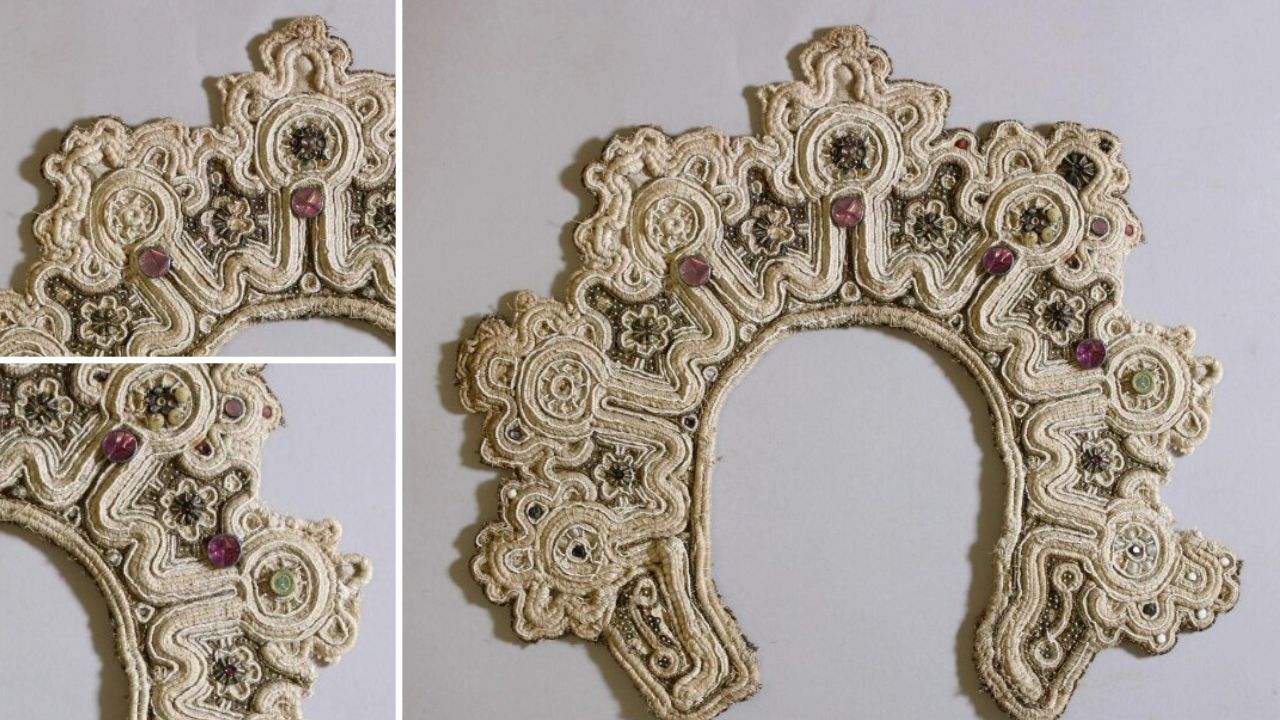
The diadem in the V&A collection—labeled as an “Eastern European headdress”—fits the description of a Pinezhsky pearl diadem almost perfectly. Its seven projections, intricate pearl setting, and design motifs closely resemble documented examples from the Pinezhsky District of the Arkhangelsk Province.
It’s important to note that this misattribution likely stems from the circumstances under which the artifact was acquired. Many historical objects were obtained without comprehensive documentation, and curators had to rely on limited information from sellers. This attribution reflects the knowledge of the time and serves as a reminder of the importance of ongoing research.
Preserving the Legacy of Northern Russian Craftsmanship
The Pinezhsky pearl diadem is more than just an ornate headdress — it represents the rich traditions and artistic achievements of the Russian North. While we may never know the specific artisans who crafted these masterpieces, their work offers invaluable insight into historical techniques and cultural practices. Correctly attributing such artifacts helps preserve craft knowledge, enabling researchers to deepen their understanding and inspiring future exploration into this fascinating heritage. By connecting these treasures to their rightful cultural contexts, we ensure that their stories continue to inform and inspire.
Written By
Ksenia Semirova
MA Textiles
An experienced hand embroidery and textile artist based in Hove, UK. Professionally practicing since 2021, mastering various techniques.
Also a fine artist and visual researcher, exhibiting her works across the UK and internationally.
Join my mailing list
Get the latest and greatest updates to your inbox!