SIRIVANNAVARI: Thai Couture, Craft and Lunéville Embroidery
New to Luneville embroidery?
Start with the chain stitch—my free visual guide shows you exactly how
When couture embroidery is discussed, the conversation tends to move very quickly towards Paris. But there are fashion houses elsewhere developing their own relationship with hand embroidery, local textiles and couture techniques. Thailand is particularly interesting in this respect: it has a long history of silk weaving, court dress, ceremonial costume and highly developed decorative craft.
SIRIVANNAVARI sits directly inside that conversation.
Founded in 2005 by Princess Sirivannavari Nariratana Rajakanya, the Thai fashion house works across ready-to-wear, couture, accessories and jewellery. Its couture line was formally established in 2015 with a collection inspired by the wardrobe of Queen Sirikit and made with locally woven Thai silk. A dedicated embroidery atelier followed in 2016.
I have been following SIRIVANNAVARI since 2019, and embroidery is difficult to separate from the way the house approaches fashion. It appears across runway pieces, eveningwear, Thai silk, bags and more experimental work, sometimes taking over an entire surface and sometimes responding to a textile that is already complicated enough on its own.
One of the techniques used by the atelier is Lunéville embroidery. The connection with French couture is well documented: members of the embroidery team trained in France, including at Lesage. But concentrating only on that connection would give a rather distorted picture of the work. Lunéville sits alongside Thai embroidery techniques, goldwork, needlework, three-dimensional construction and an enormous variety of textile traditions.
The more interesting question is how all of these are used within contemporary Thai fashion.
A couture house with its own embroidery team
The scale of SIRIVANNAVARI’s embroidery practice became particularly visible in STITCH: Rhythm of the Threads, presented during Bangkok Design Week in 2025. The exhibition brought garments and embroidery samples out of the fashion context and showed them alongside demonstrations by the house’s embroiderers. Techniques included Lunéville, Thai embroidery, goldwork, needlework and experimental combinations of materials.
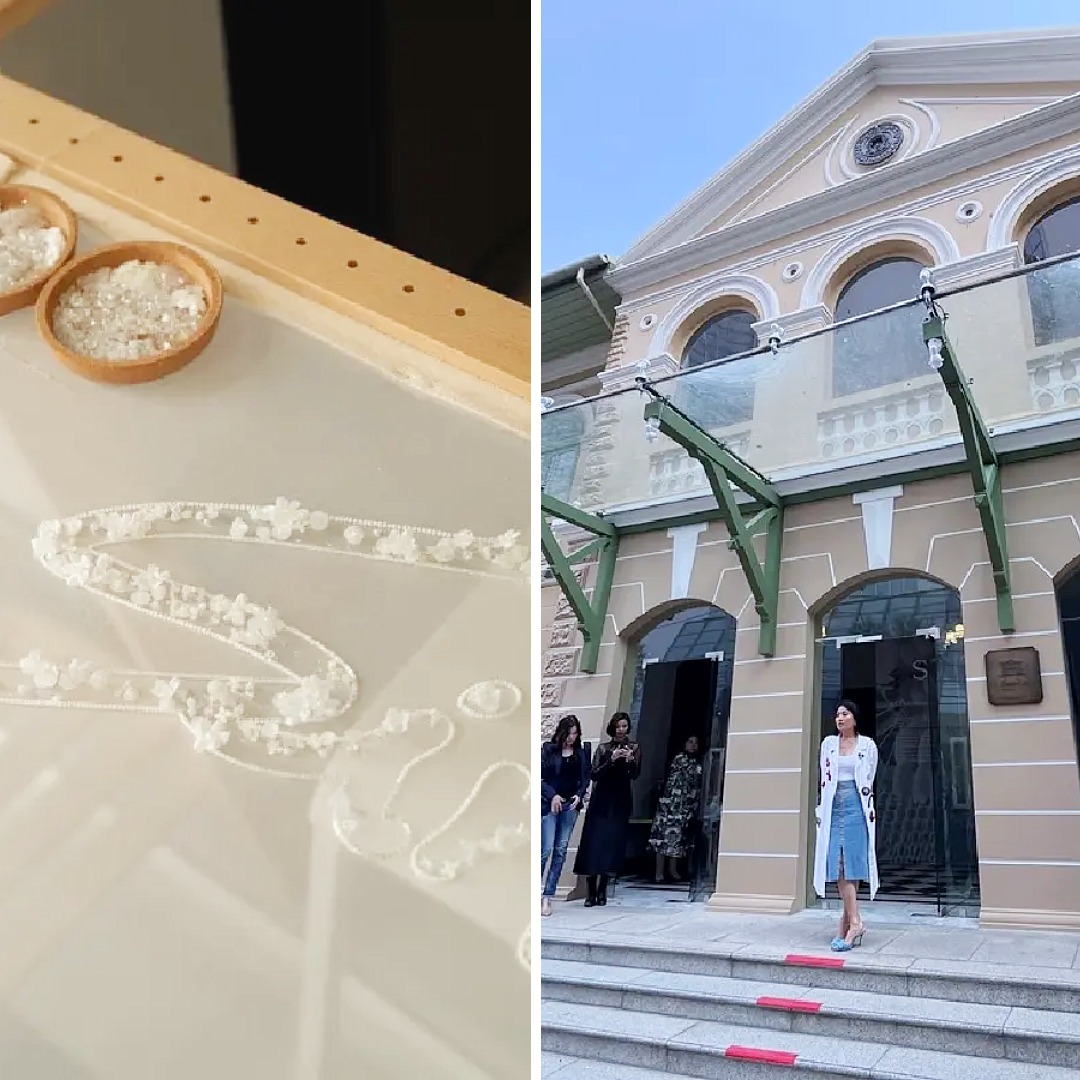
That matters because embroidery at SIRIVANNAVARI is not simply commissioned when a collection needs embellishment. It is developed within the house as part of the design process. The official history describes the atelier, established in 2016, as working across couture, bridalwear, ready-to-wear, menswear, leather goods and jewellery.
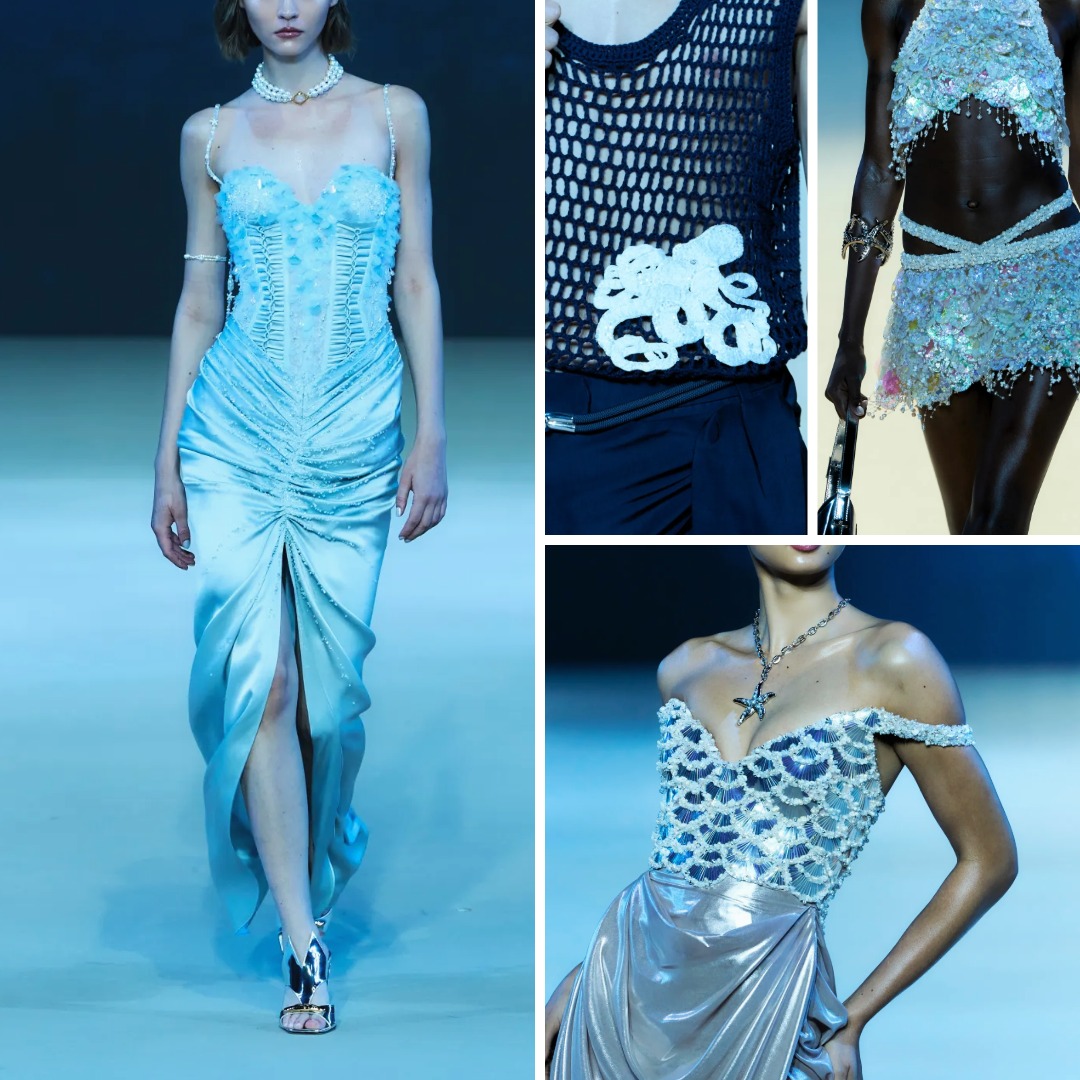
Recent collections make that visible beyond embroidery alone. Spring/Summer 2026, for example, combined tailoring and contemporary dressmaking with Don Koi indigo textiles from Sakon Nakhon, traditional woodblock-print references and hand craft produced by the SIRIVANNAVARI team.
This is a useful place to start because it puts embroidery where it belongs: inside fashion, rather than treating it as a separate decorative craft.
Thai embroidery comes first
Before looking at Lunéville, it is worth understanding that the atelier already works from a substantial Thai embroidery vocabulary.
During STITCH, Princess Sirivannavari referred specifically to techniques connected with Thai court dress and khon costume, including embroidery worked on frames, raised embroidery, silk embroidery and metal-thread work.
Khon costume alone involves an extraordinary concentration of specialist craft. Its production includes weaving, embroidery, gold and metallic decoration, mask making and jewellery, with different specialists responsible for different parts of the finished costume. The Queen Sirikit Museum of Textiles has documented the revival of these workshops and their techniques.
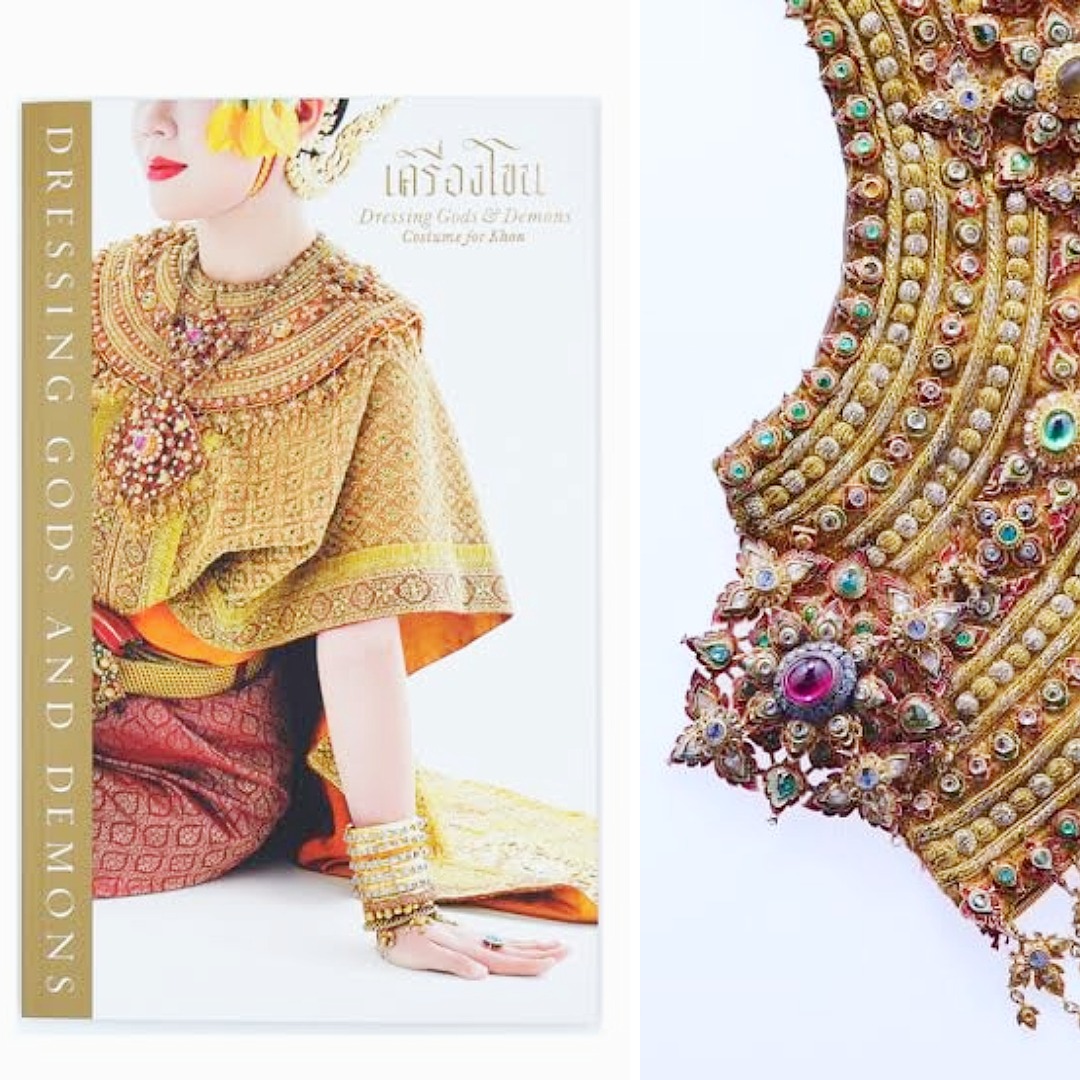
The materials are also far from modest. Historic Thai formal dress can combine silk with beads, sequins, gold and silver threads, flat metal strips and metal coil.
So when beads, sequins, metallic surfaces and dense embroidery appear in contemporary Thai couture, they are not automatically signs of French influence. Thailand already has its own long history of richly constructed textile surfaces.
That distinction becomes important when Lunéville enters the story.
Where Lunéville came from
The connection with Lesage is quite direct.
Princess Sirivannavari explained during STITCH that members of the team were sent to France to study embroidery techniques. She also spoke about aiming for a technical standard comparable with Lesage while maintaining the Thai knowledge already present in the atelier.
SIRIVANNAVARI embroiderer Prayut Sirikul gave a more practical description in a 2025 interview. He spoke about combining Thai embroidery using gold, silver and other metal materials associated with khon costume with French Lunéville embroidery, and confirmed that members of the team had travelled to France for training.
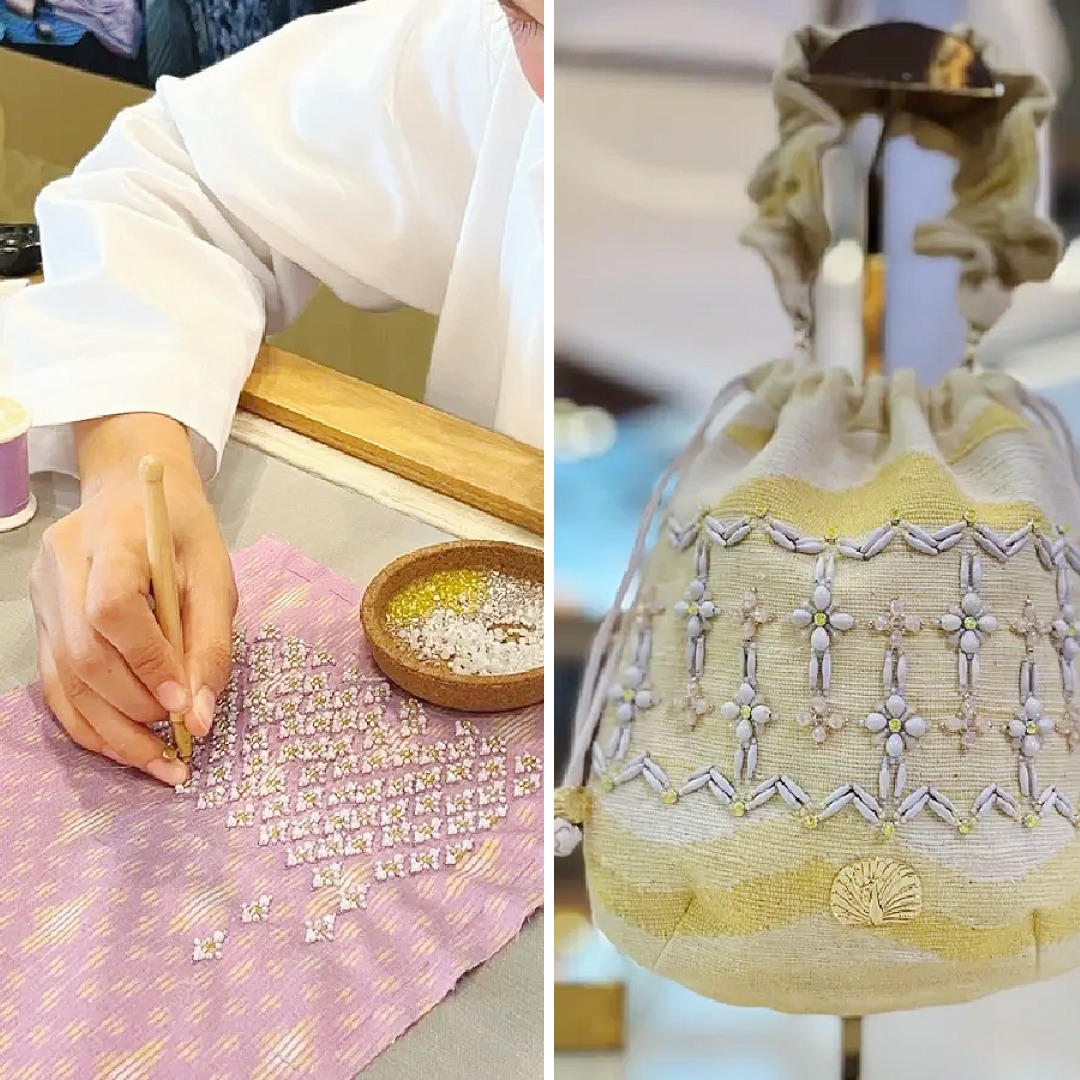
Lunéville therefore became an additional technique rather than a replacement for an existing practice.
And this is where looking at the actual clothes becomes much more useful than simply talking about the provenance of the technique.
How SIRIVANNAVARI uses Lunéville
For Autumn/Winter 2022–23, the atelier used Lunéville to embroider crystals across transparent tulle, creating an irregular surface intended to suggest melting ice. Another piece used crystal embroidery following the lines and structure of lace. Both were later selected for the STITCH exhibition as examples of the technique.
Technically, this is recognisable couture embroidery territory: fine ground, repeated crystal work and a large embellished area that still allows the fabric underneath to remain visible.
The Thai Silk Festival 2024 look is more particular to the house.
Here, the starting point was Thai silk woven with a luk kaew geometric pattern. The atelier picked up that geometry in crystals, sequins and beads applied with Lunéville. Some elements continued beyond the edge of the textile in hanging strands, turning a woven pattern into a three-dimensional embellished structure.
This is exactly the sort of application I find worth examining.
The embroidery is not a separate motif placed on Thai fabric afterwards. The textile gives the embroidery its structure.
A traditional woven pattern moves from silk into glass, beads and sequins, and Lunéville happens to be the method used to construct that extension.
S’Craft: when the textile is already doing a lot
The S’Craft bags offer another version of the same design problem.
For S’Craft: Craftsmanship 2022, SIRIVANNAVARI worked with Thai woven textiles from different regions, including phrae wa, mat mi ikat and yok dok silk. These are fabrics with strong patterns and colour before a single bead is added.
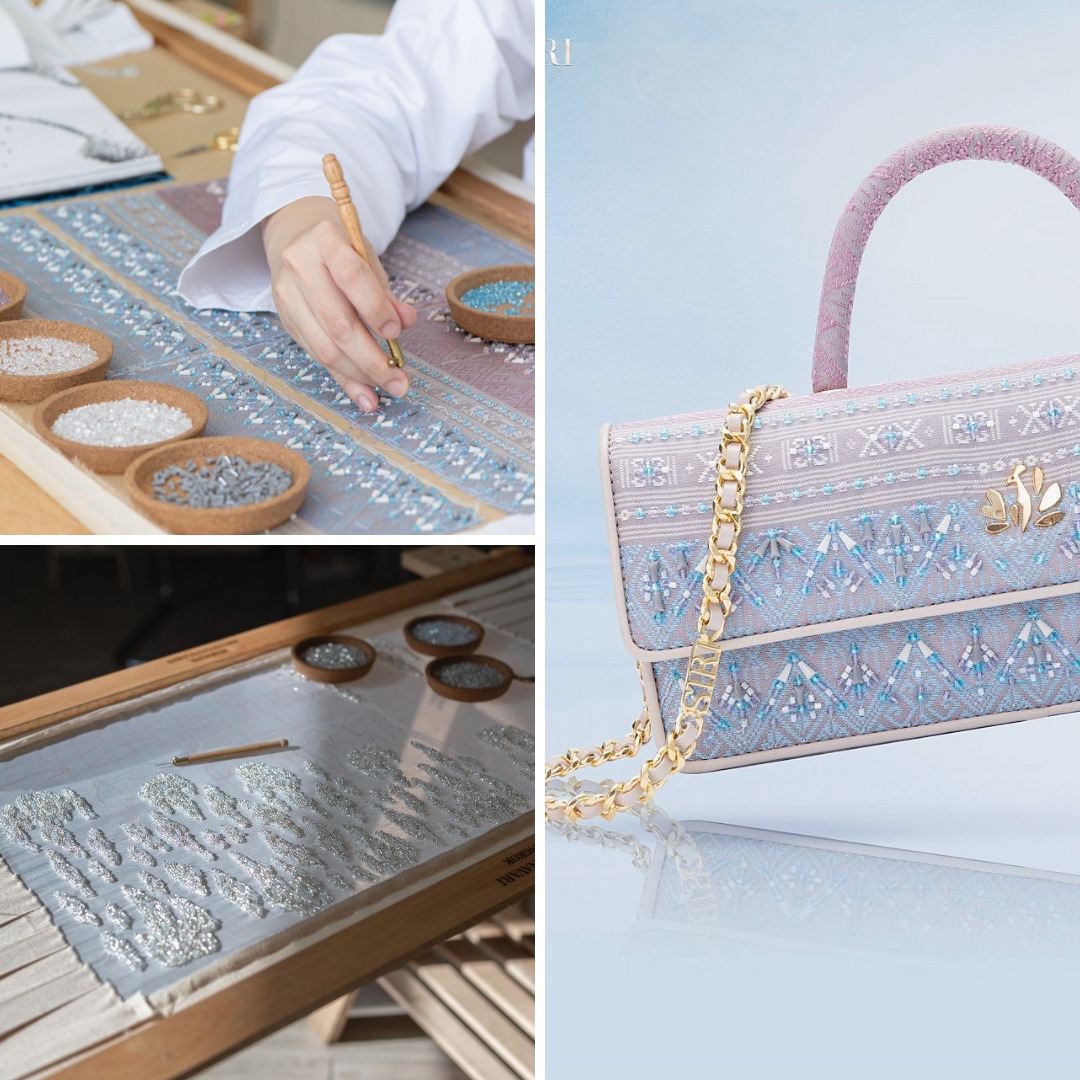
The embroidery was developed in relation to those woven patterns. L’Officiel Thailand describes feathers, crystals and beads used with French embroidery techniques, specifically naming Lunéville. Pale and transparent embellishments were selected deliberately so that the colour and structure of the silk remained visible underneath.
Some pieces use crystal embroidery almost like a net laid over the fabric; elsewhere, individual embroidered elements follow details already woven into the silk.
This is very different from starting with plain organza.
A richly woven textile already has rhythm, pattern, colour and texture. Adding embroidery means deciding what needs to be emphasised, what can be interrupted and what should simply be left alone.
That conversation between cloth and embroidery is one of the strongest aspects of these pieces.
Beyond Lunéville
Restricting the discussion to Lunéville would also miss how broad the embroidery language of the house has become.
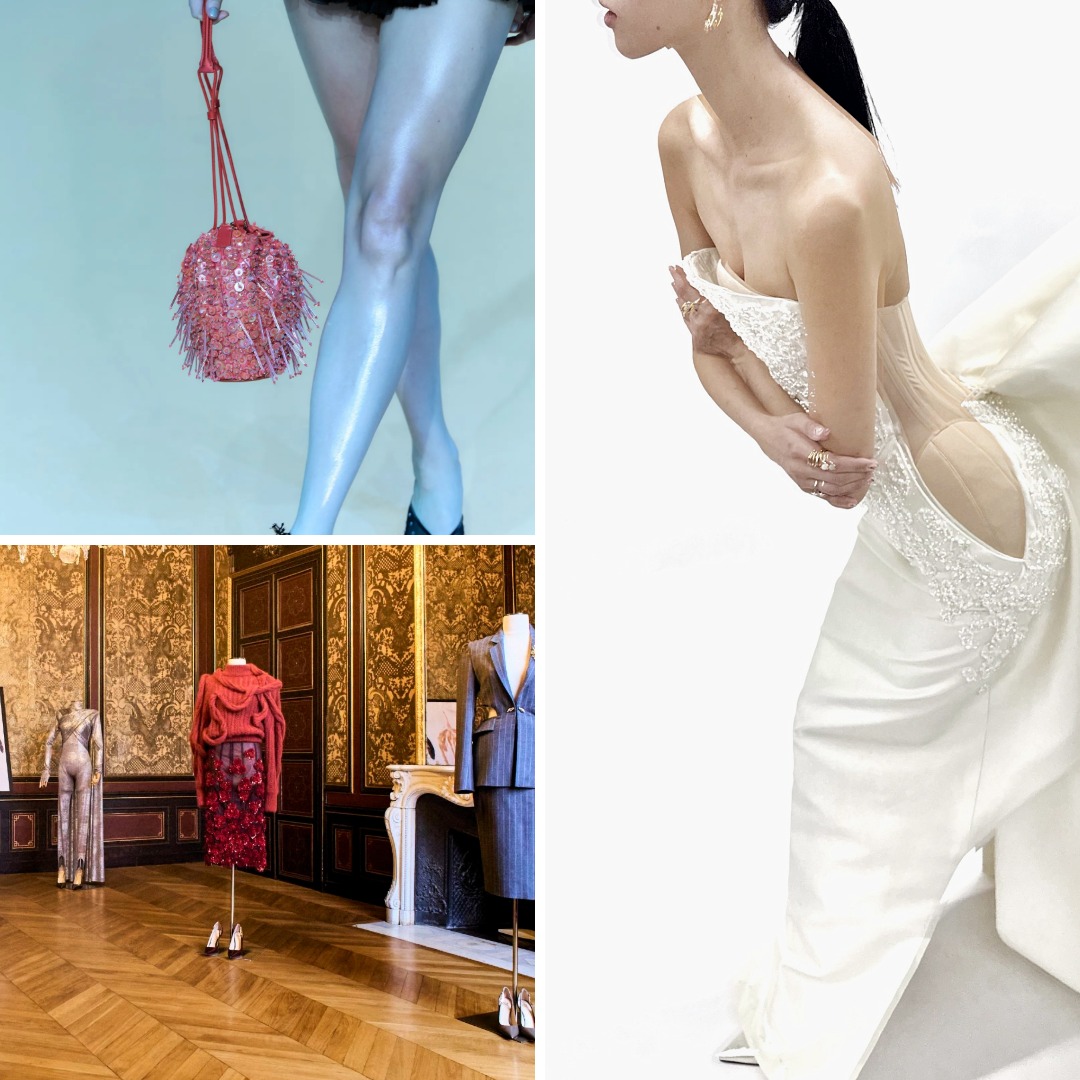
For Autumn/Winter 2024–25, drawings of Thai flowers including pip, ylang-ylang, gardenia and lamduan were developed into three-dimensional embroidery using threads, beads, crystals and reflective materials. The embroidery was integrated into a collection built around draping, sharply constructed silhouettes and references to women in art.
For Spring/Summer 2025, a finale dress took a completely different approach. Separate embroidered components made with crystals and pearls were built up into a cracked, raised surface and then assembled onto the garment. L’Officiel Thailand reported thousands of stitches and several hundred hours of embroidery.
By Spring/Summer 2026, The Eternal Nautilus moved again: marine forms, shells, hand embroidery, lace, crochet and knitting appeared alongside Don Koi indigo textiles and contemporary tailoring. Vogue Thailand described the collection explicitly through this meeting of Thai craft and contemporary fashion.
Thai couture and the older French connection
SIRIVANNAVARI’s use of French embroidery techniques also sits within a much longer history.
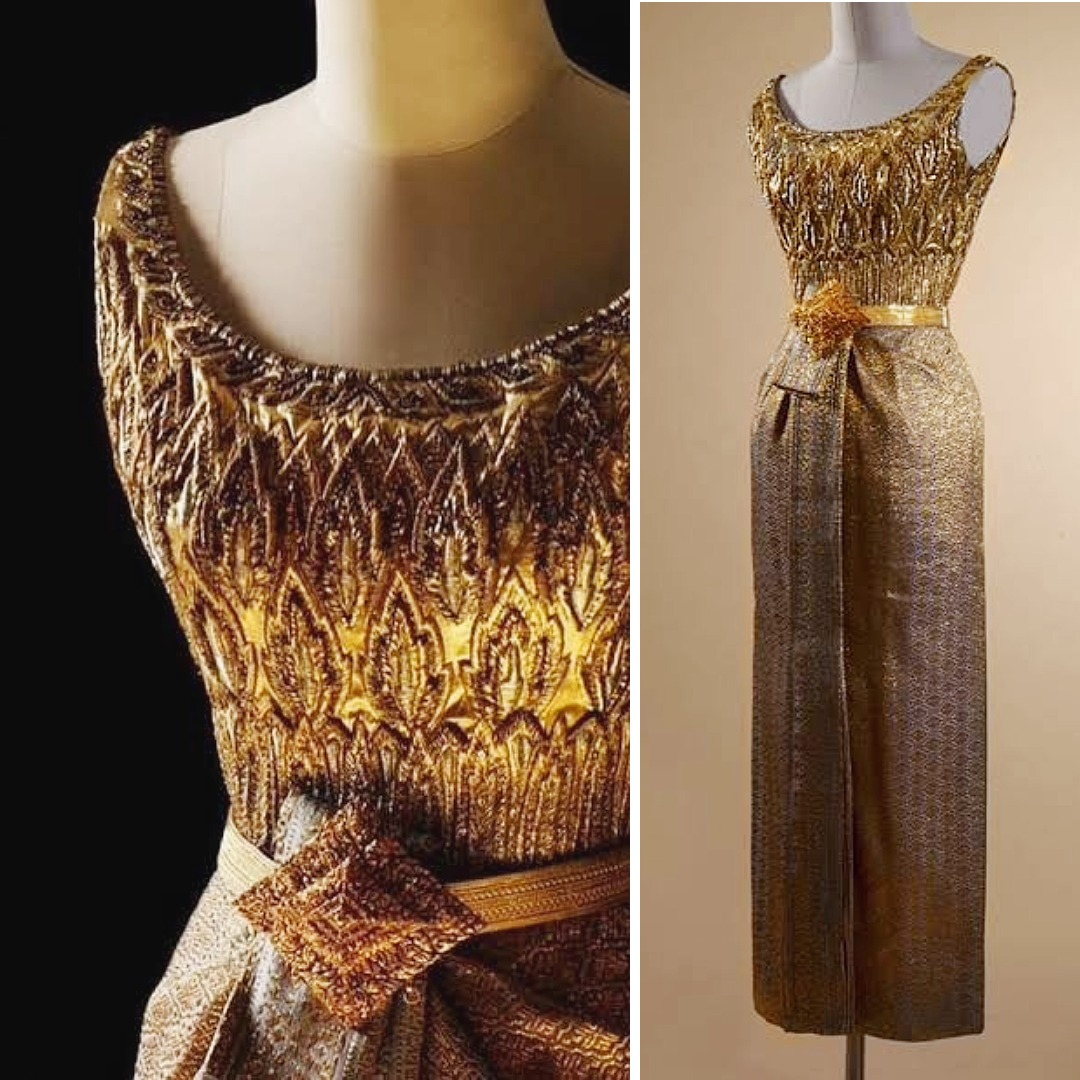
Queen Sirikit worked with Pierre Balmain for more than two decades, and several of the resulting garments combined Thai or Thai-inspired dress with embroidery produced by Lesage in Paris. The Queen Sirikit Museum of Textiles has preserved both garments and embroidery samples from this collaboration.
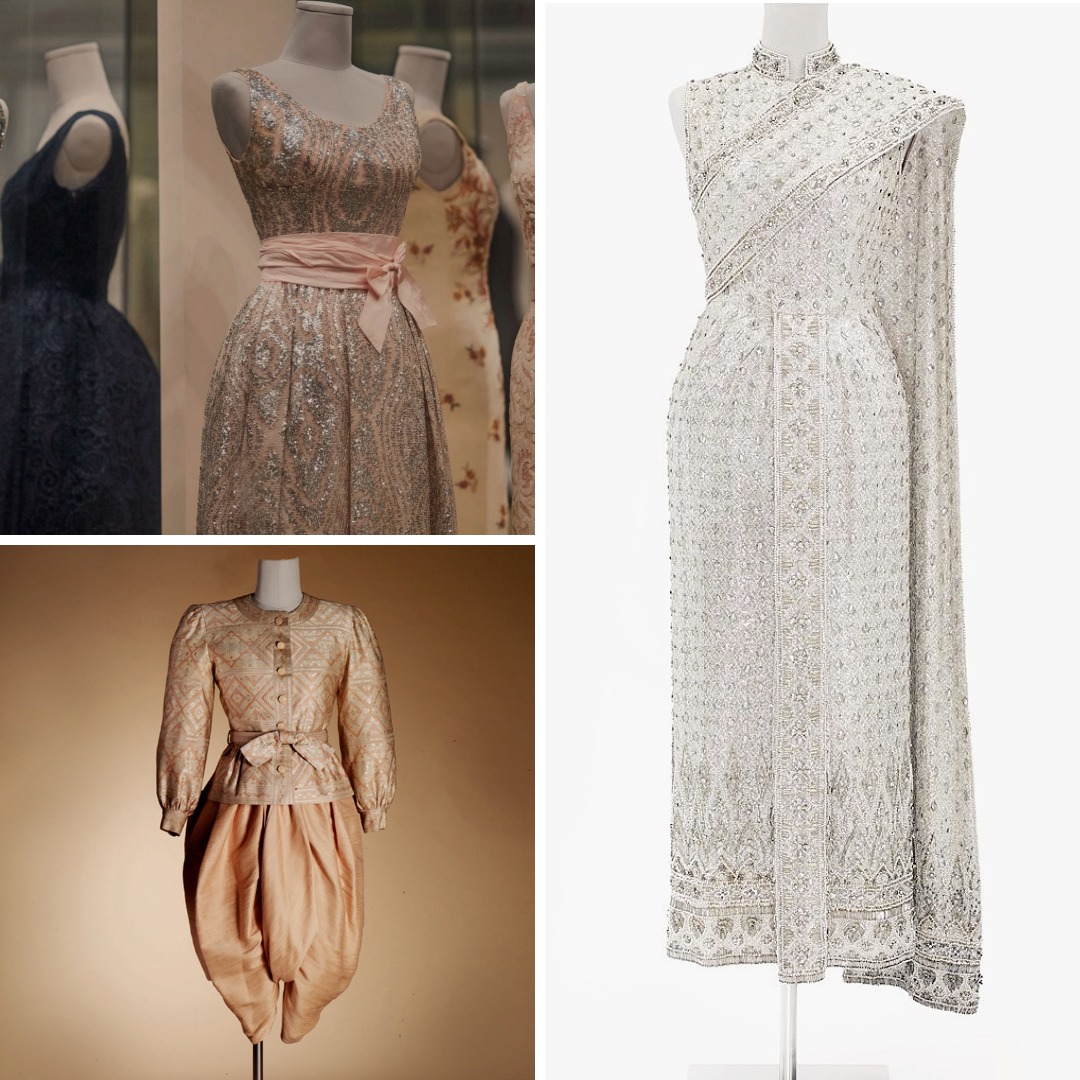
A 1967 variation of Thai national dress designed by Balmain, for example, uses silk and metal-thread brocade covered with Lesage embroidery in crystals, beads, paillettes and silver metal thread.
A 1979 evening dress combines SUPPORT mat mii silk from Buri Ram with rhinestone and bead embroidery by Lesage.
But the contemporary situation is different.
In those historic examples, Thai textiles travelled into a Paris couture system and the embroidery was produced there. SIRIVANNAVARI now has its own embroidery team in Bangkok, working directly with Thai textiles, Thai references and techniques learnt both locally and abroad.
The relationship is no longer simply Thai textile plus French couture.
A contemporary language for Thai couture
What makes SIRIVANNAVARI useful to look at is not the fact that it can produce heavily embroidered clothes. There are plenty of couture houses capable of that.
It is the way different systems of making are allowed to sit together.
A woven luk kaew pattern can become crystal embroidery. Mat mi silk can remain clearly visible beneath a transparent layer of embellishment. A Thai flower can move from a drawing into a raised embroidered surface. Traditional textile production from Sakon Nakhon can appear in the same collection as contemporary tailoring, lace and experimental handwork.
Lunéville has a place in that vocabulary, but it is not the vocabulary itself.
And perhaps that is the better way to introduce SIRIVANNAVARI to someone who knows French couture embroidery well but has paid less attention to contemporary Thai fashion: not as a house borrowing couture craft from Paris, but as a Thai fashion house deciding for itself which techniques, textiles and forms belong together.
If you want to look more closely at the technique itself, I have a separate article, What is Lunéville Embroidery and Why I Love It, where I explain how it works and why I keep coming back to it in my own practice. And if you would like to try it yourself, my Intro to Lunéville Embroidery course takes you through the basics step by step, from the first chain stitches to beads, sequins and a finished monogram.
Written By
Ksenia Semirova
MA Textiles
An experienced hand embroidery and textile artist based in Hove, UK. Professionally practicing since 2021, mastering various techniques.
Also a fine artist and visual researcher, exhibiting her works across the UK and internationally.
Join my mailing list
Get the latest and greatest updates to your inbox!